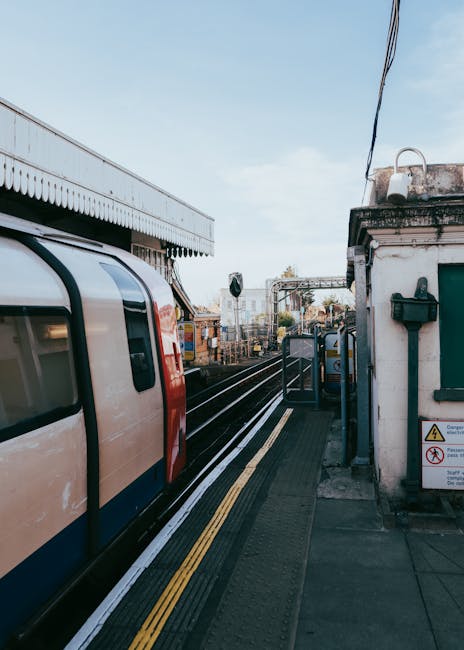
Tufnell Park station moving tips for local removals
Moving near Tufnell Park station can look straightforward on a map, and then the day arrives and the reality is very different. There are busier streets than you expected, a staircase that feels narrower with every box, and a van that needs to park just so. If you are planning a move in this part of North London, the right Tufnell Park station moving tips for local removals can save you time, money, and a fair bit of stress.
This guide focuses on the practical side of moving around the station area: how to plan access, pack for quicker loading, avoid common hold-ups, and keep the day calm enough to manage. Whether you are moving a flat, a family home, or just a few bulky items, the aim is simple. Make the move work with the area, not against it.
Quick takeaway: near a station like Tufnell Park, the move is won before the van arrives. Good timing, clear access, and tight packing usually matter more than people expect. Small details stack up fast.
- Plan around local traffic and footfall
- Measure access points before moving day
- Use the right packing method for stairs and tight hallways
- Agree parking and loading arrangements early
- Keep essentials separate so the first night is easier
Contents
- Why Tufnell Park station moving tips for local removals Matters
- How Tufnell Park station moving tips for local removals Works
- Key Benefits and Practical Advantages
- Who This Is For and When It Makes Sense
- Step-by-Step Guidance
- Expert Tips for Better Results
- Common Mistakes to Avoid
- Tools, Resources and Recommendations
- Law, Compliance, Standards, or Best Practice
- Options, Methods, or Comparison Table
- Case Study or Real-World Example
- Practical Checklist
- Conclusion
- Frequently Asked Questions
Why Tufnell Park station moving tips for local removals Matters
Local removals around Tufnell Park station are often shaped by the geography of the area as much as the size of the property. You may be dealing with terraced streets, tighter curb space, shared entrances, basement flats, converted buildings, or a walk from the van to the front door that is just long enough to become annoying. Nothing impossible. Just fiddly. And fiddly is what creates delays.
The closer your move is to a station, the more likely you are to see buses, pedestrians, taxi drop-offs, delivery drivers, and the usual London stop-start flow. That means timing matters. A ten-minute delay at the wrong moment can ripple through the whole day, especially if your crew is waiting on one parking space or a slot to unload.
There is also the emotional side, which people tend to underestimate. When a move feels chaotic, boxes get placed badly, fragile items get rushed, and everyone gets a little sharper in tone than they meant to. Good moving tips do more than protect furniture. They protect the atmosphere, which sounds soft until you are standing in a hallway surrounded by half-packed kitchenware and someone is asking where the kettle went.
In our experience, the best local moves near Tufnell Park are the ones where the practical details are settled early. Parking, access, packing, and timing should not be left to luck. Luck is not a moving plan.
How Tufnell Park station moving tips for local removals Works
Think of a local move near the station as three linked parts: access, loading, and timing. If one of them goes wrong, the whole move slows down. If all three line up, the day feels strangely manageable. Not easy exactly, but manageable.
1. Access comes first
Before moving day, check where the van can stop, whether there is room to carry items safely, and how far the carry is from the front door to the vehicle. A short walk from flat to van makes a real difference. So does knowing about stairs, narrow landings, shared entrances, and any awkward bends in the hallway. A sofa that looks fine in your lounge can suddenly become a minor engineering problem in a Victorian staircase.
2. Loading needs a sequence
Successful local removals usually follow a sensible loading order. Heavier items go in first, fragile boxes are secured well, and awkward shapes are placed so they do not shift. The point is not just to fit everything in. It is to fit everything in without having to repack halfway through because the last thing on the van was the one item you needed at the front.
3. Timing keeps the day calm
Near Tufnell Park station, timing matters because traffic and footfall can change quickly. A move that starts too late may overlap with school runs, commuter activity, or the general London habit of every road feeling busy when you are carrying a bed frame. A good removal plan leaves space for the unexpected.
If you are using professional help, you will usually notice that experienced teams ask a lot of practical questions up front. That is a good sign. They are not being nosy. They are trying to prevent the exact sort of problems that slow local moves down.
Key Benefits and Practical Advantages
The right approach to moving near Tufnell Park station gives you more than convenience. It can reduce physical strain, protect belongings, and shorten the time your move takes from start to finish. And yes, it can save money too, because fewer delays usually mean fewer billable hours where time is part of the job.
| Benefit | What it means in practice | Why it matters locally |
|---|---|---|
| Less wasted time | Boxes are ready, access is clear, and loading starts promptly | Traffic and parking pressure near the station make delays costly |
| Lower damage risk | Items are packed and carried in a sensible order | Stairs, narrow halls, and short carries can still cause knocks |
| Less stress | The day follows a plan instead of guesswork | Busy streets can add pressure if you have not prepared |
| Better value | The crew spends less time waiting or reworking the load | Local removals are often priced by time, scope, or both |
| Easier settling in | Essentials are easy to find after arrival | A smooth first evening matters more than people think |
There is also a subtle benefit that gets overlooked: confidence. Once you know the plan fits the area, the move stops feeling like a gamble. You still have plenty to do, obviously, but you are not improvising every ten minutes.
Who This Is For and When It Makes Sense
This kind of advice is useful for anyone moving within a few streets of Tufnell Park station, but it is especially valuable if you are dealing with one of the following situations:
- A flat move in a converted building with stairs or narrow access
- A family move where there are more boxes, more furniture, and less time than expected
- A student or first-time renter move with a small van and a tight schedule
- A same-day local move where you are handing over keys and need everything to run smoothly
- A move that includes bulky furniture, white goods, or fragile items that need extra care
- A short-distance move where people assume "it's only local" and therefore under-plan it
Truth be told, local removals can be the trickiest because people relax too early. "It's just round the corner" sounds reassuring, but if the road is awkward or parking is tight, round the corner can still eat half a morning. So the better question is not how far you are moving. It is how the property and street layout affect the work.
If you are unsure how much help you need, consider how long it would take you to carry every item safely without damage. If that answer makes you wince, you probably need more support than a car boot and a few friends.
Step-by-Step Guidance
Here is a practical way to approach moving near Tufnell Park station without making the process more complicated than it needs to be.
Step 1: Survey the property properly
Walk through each room with a notebook or phone notes. Measure large furniture, note fragile items, and identify anything that may need to be dismantled. Look at door widths, stair turns, and where the biggest items will pass through. A wardrobe may be fine in a room, but the stair landing can tell a different story.
Step 2: Check the street access
Stand outside at roughly the time you plan to move. Is there space for a van? Is the road busy with parking? Are there bins, lamp posts, or regular delivery activity to think about? Near the station, a street can feel calm at 8am and noticeably busier an hour later. Small time shift, big difference.
Step 3: Decide what needs dismantling
Flat-pack furniture, bed frames, and some shelving units are much easier to move when partly dismantled. Keep screws and fittings in labelled bags and tape them to the relevant item or pack them in a dedicated parts box. That one little bag is always the thing people lose. Always.
Step 4: Pack by room and by weight
Use strong boxes and keep them at a manageable weight. Heavy items like books go in smaller boxes. Lighter but bulky items can go in larger boxes. Label each box clearly with the room and a short note about the contents. "Kitchen - mugs and kettle" is far more helpful than "misc."
Step 5: Create a load order
Put the least-needed items and the biggest, sturdiest pieces on the van first. Keep essentials and fragile items accessible. If you are moving into a flat, you may want to load by room so unloading is easier. It sounds basic, but it saves so much time at the other end.
Step 6: Keep an essentials bag separate
Pack medication, chargers, snacks, documents, toilet paper, kettle items, and a change of clothes in one easy-to-reach bag. This is one of those small things that makes the first night feel normal. You do not want to be hunting for a toothbrush at 11pm.
Step 7: Confirm final timings
Check the move time, handover time, and any parking arrangements. If a removal team is coming, make sure they know about access restrictions, floor levels, and any heavy items in advance. Clear instructions are kind. They are efficient too.
Step 8: Do a last walk-through
Before the van leaves, check cupboards, loft space, under sinks, wardrobes, and behind doors. Little things vanish into corners during a move. Keys, remotes, a toolbox, the router cable - somehow all the awkwardly important bits try to hide at once.
Expert Tips for Better Results
Some moving advice sounds sensible but does very little in real life. These tips are the ones that tend to make a genuine difference near Tufnell Park station.
- Start early, even for a local move. Morning light helps with packing and makes it easier to spot missed items. Also, the road is often calmer.
- Protect corners and edges. Hallway corners, door frames, and stair banisters take the brunt of the action. A little protection can stop avoidable scuffs.
- Keep pathways clear. A box left in the wrong place becomes a trip hazard very quickly.
- Use smaller boxes for heavy contents. Overfilled boxes slow everyone down and can split at the worst moment.
- Separate valuables. Passports, laptops, cash, jewellery, and sensitive documents should travel with you, not in the back of the van.
- Think about the weather. A wet London morning changes everything. Floors get slippery. Paper bags soften. People rush. Not ideal.
A small practical note: if you are in a building with shared stairs, let neighbours know the rough move time. You do not need to make a production out of it, just enough to avoid awkward collisions at the door. A friendly heads-up goes a long way.
And if you are the sort of person who packs the "miscellaneous" box with no system at all, no judgement. We have all done it. It is just worth resisting the temptation this time.
Common Mistakes to Avoid
Most moving problems near the station are predictable. That is good news, because predictable problems are the easiest ones to avoid.
Underestimating access
People often measure rooms but forget the route out of them. Stairs, landings, corners, and front steps can matter more than the size of the sofa itself.
Leaving parking to chance
If the van has nowhere sensible to stop, the whole schedule starts slipping. Even a short carry can become exhausting if it has to be repeated dozens of times.
Overpacking boxes
A box that is too heavy is awkward to lift and much more likely to split. That creates delays and a mess. Nobody enjoys that sound when the bottom gives way.
Not labelling properly
If every box looks the same, unpacking becomes a guessing game. Clear labels save time on both sides of the move.
Forgetting the essentials
It is easy to focus on furniture and forget the practical things you need on the first night. Chargers, toiletries, tea bags, and basic tools are worth prioritising.
Assuming "local" means "easy"
A short-distance move can still be difficult if the street is awkward or the property access is poor. Local is not a synonym for simple. Sometimes it is the opposite.
One more thing: avoid leaving dismantling or major packing until the last evening. The final hours before a move are rarely your most organised ones. That is just human nature, really.
Tools, Resources and Recommendations
You do not need specialist kit for every move, but the right basic tools can make a noticeable difference. In many local removals, a small set of sensible items prevents a lot of hassle.
- Sturdy boxes: Choose a mix of small, medium, and large sizes so you can match the box to the contents.
- Packing tape and dispenser: Faster sealing, stronger closures, fewer surprises.
- Labels or marker pens: Clear room labels help unloading stay organised.
- Furniture covers or blankets: Useful for protecting items from knocks and dust.
- Tool kit: Screwdrivers, an Allen key set, and a small hammer often come in handy.
- Straps or ropes: Good for securing items in transit where appropriate.
- Gloves and sensible footwear: Basic, yes, but your hands and feet will thank you later.
If you are comparing moving support, look at what is included rather than just the headline price. Some teams help with loading only. Others will dismantle furniture, wrap fragile items, and place boxes room by room at the destination. That difference can matter more than a small saving.
For readers exploring broader moving help, related service pages on the same site can be useful, such as man and van support in Tufnell Park or London removal company services, if those fit your needs and the job size. A good local move is usually about matching the service to the actual workload, not the other way around.
Law, Compliance, Standards, or Best Practice
For most home moves, the main legal and practical concerns are about road safety, property access, and handling items responsibly. You do not usually need to memorise regulations to move house, but you do need to avoid making assumptions.
Parking matters. If a van is stopping on a street near the station, make sure the driver understands the local restrictions, loading expectations, and any time limits. Where formal permissions or restrictions apply, it is better to check in advance than to improvise on the day. That is true whether you are moving furniture yourself or using professional movers.
Health and safety also matters, even for a domestic move. Heavy lifting should be done carefully, with two-person lifts where needed and proper handling of awkward items. Wet pavements, loose stair runners, and cluttered hallways are all obvious trip hazards once you are carrying a wardrobe. A bit of planning reduces the risk a lot.
Professional movers are generally expected to work in a way that protects both your belongings and the property itself. That includes sensible packing, careful lifting, and clear communication about fragile items or access limits. If you are hiring help, it is fair to ask how they approach these things. You are not being difficult. You are being sensible.
Options, Methods, or Comparison Table
There is no single right way to handle a move near Tufnell Park station. The best method depends on how much you are moving, how accessible the property is, and how much help you want on the day.
| Method | Best for | Strengths | Trade-offs |
|---|---|---|---|
| Self-move with a hired vehicle | Small loads and simple access | Can be cheaper if well organised | More physical work, more coordination |
| Man and van | Local moves, flats, and medium-sized loads | Flexible, efficient, often good for short-distance moves | May not suit very large or complex moves |
| Full removals service | Larger homes or difficult access | More hands, more support, less strain on you | Usually costs more, but can save time and stress |
| Hybrid approach | When you want help with only part of the move | Useful balance of cost and support | Needs clear planning so roles do not overlap badly |
If your place is near the station and access is tight, a more hands-on service can easily pay for itself in reduced delay. On the other hand, if you are moving a small flat with decent parking and only a few heavy items, a lighter-touch option may be enough. The answer really depends on the shape of the move, not just the postcode.
Case Study or Real-World Example
A typical local move near Tufnell Park station might involve a one-bedroom flat with a bed frame, sofa, dining table, several boxes, and a few awkward bits like a mirror and a plant shelf. Nothing outrageous. Just enough to make the day feel busy.
In one common scenario, the residents do most of the packing the day before, but leave the kitchen until late. The removals team arrives, and everything is fine at first. Then they discover that the heaviest boxes are mixed in with glassware, the hallway is partly blocked, and the bed frame has not been dismantled. Suddenly the move takes longer than planned.
Compare that with a better-prepared version. The furniture is ready to go, boxes are labelled by room, fragile items are separated, and the van can stop close to the entrance. The same amount of stuff, same general area, very different experience. One move feels like controlled effort. The other feels like a puzzle you did not want to play.
A small but realistic detail: at around 9am, the street outside a station area can change character quite quickly. A quiet moment can turn into a steady stream of walkers, deliveries, and cars. So the move that looked calm at breakfast may need to be faster by mid-morning. Planning for that shift is a smart little win.
The lesson is simple. Near Tufnell Park station, preparation is not overkill. It is what keeps a local removal feeling local rather than sprawling into the whole day.
Practical Checklist
Use this checklist to keep your move on track. It is deliberately practical, not fancy.
- Measure large furniture and note any items that need dismantling
- Check stairs, doorways, landings, and the route to the van
- Confirm where the vehicle can park or stop safely
- Tell movers about fragile, heavy, or awkward items in advance
- Pack heavy items into smaller boxes
- Label every box with room and contents
- Keep valuables and documents with you
- Prepare an essentials bag for the first 24 hours
- Protect floors, corners, and furniture edges where needed
- Clear hallways, staircases, and entrances before loading starts
- Check cupboards, wardrobes, and hidden storage before leaving
- Take meter readings and photos if useful for records
- Leave keys, chargers, and important items somewhere obvious
Small expert summary: If you do only three things well, make them access, packing, and timing. Get those right and most local moves near Tufnell Park station become far easier than expected. The rest is just muscle, tape, and a bit of patience.
Conclusion
Moving near Tufnell Park station does not have to be a stressful guessing game. With the right preparation, a local removal can be efficient, calm, and surprisingly tidy. The big idea is simple: respect the practical realities of the area, pack with purpose, and plan the day so access and timing work in your favour.
If you take anything from this guide, let it be this: a smooth move is usually built from a dozen small decisions, not one dramatic rescue. Measure the awkward bits. Label the boxes. Keep the essentials close. And give yourself a bit of breathing room, because the day always feels better when it is not being rushed from the first minute.
Get a free quote today and see how much you can save.
And once the last box is inside and the door finally closes, you will feel it. That quiet relief. New place, fresh start, kettle on. Honestly, that moment makes all the planning worth it.
Frequently Asked Questions
What are the most important Tufnell Park station moving tips for local removals?
The most important tips are to plan access carefully, pack in a way that supports quick loading, and time the move around local traffic and parking conditions. Near the station, small delays can snowball, so preparation really pays off.
How early should I start preparing for a local move near Tufnell Park station?
For a simple move, a few weeks gives you enough time to declutter, gather packing materials, and book help if needed. If you have a larger home or awkward access, starting earlier is wise. Rushed packing is where most stress begins.
Do I need a full removals service for a short move in the area?
Not always. If you have a small load, straightforward access, and a flexible schedule, a man and van style service or even a self-move might work. If there are stairs, bulky furniture, or tight parking, extra help can be worth it.
What should I pack separately for moving day?
Keep valuables, documents, medication, chargers, toiletries, snacks, and a change of clothes separate. An essentials bag makes the first evening much easier and stops you rummaging through every box looking for the kettle lead.
How do I avoid delays on a move near the station?
Confirm parking and access in advance, label boxes clearly, dismantle furniture where sensible, and keep hallways clear. Also try to avoid starting too late in the day if traffic or footfall is likely to build.
Is it better to move on a weekday or weekend?
That depends on your situation. Weekdays can be busier around work hours and school runs, while weekends may bring their own traffic patterns. The best choice is usually the time that gives you the clearest access and least pressure at both properties.
How do I protect furniture in a local move?
Use covers, blankets, tape where appropriate, and careful handling at corners and stair turns. Fragile items should be packed tightly so they do not move around in transit. Good wrapping saves time and damage, simple as that.
What if my building has narrow stairs or no lift?
Tell your movers in advance and measure anything large that needs to pass through. You may need to dismantle some furniture or use a different handling approach. Narrow stairs are manageable, but only if everyone knows about them before lifting starts.
How can I make unpacking easier after a move?
Label boxes by room and priority, and unpack essentials first. Start with the kitchen, bathroom, and bedding if possible. Getting the basics sorted early makes the rest of the place feel more livable quickly.
Are there any special parking issues around Tufnell Park station?
Local parking can be tight and may change depending on the time of day and road layout. It is best to check where a van can stop safely and how long loading may take. A few minutes of planning can prevent a lot of hassle later.
What is the biggest mistake people make with local removals?
Probably assuming a small move needs very little planning. Even local removals can run late if access is awkward, boxes are badly packed, or the load order is chaotic. Under-planning is the classic one, every time.
How do I know which moving option is right for me?
Look at the size of the move, the building access, the amount of lifting required, and how much time you want to spend organising it. If the move feels physically awkward or time-sensitive, a more supported service is usually the better fit.